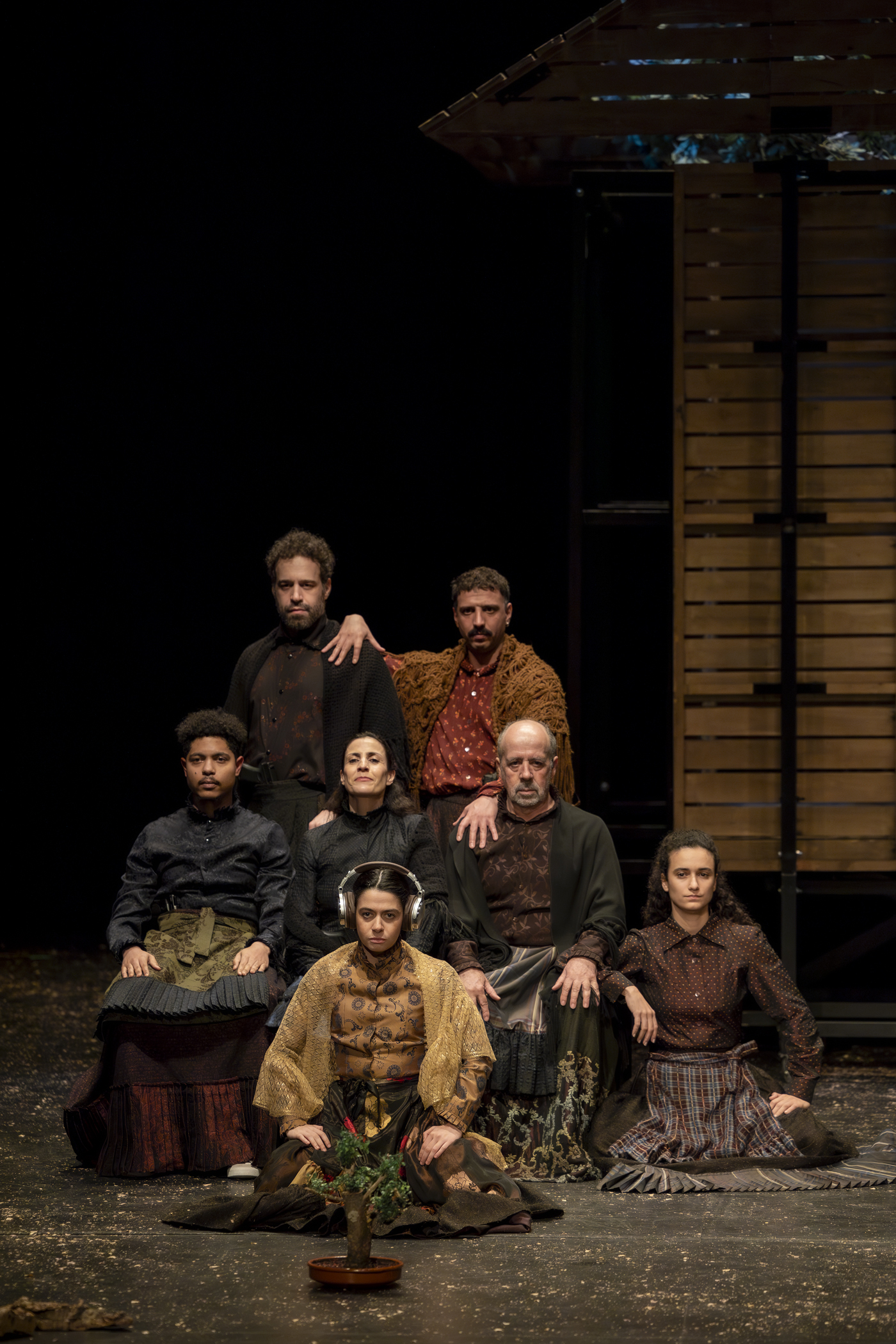
This family kills fascists. It is an old tradition that every family member has always pursued. Today, they gather at a house in the country, in southern Portugal, near the village of Baleizão. One of the young women in the family, Catarina, will kill her first fascist, kidnapped specifically for this purpose. It is a day of celebration, beauty and death. However, Catarina is unable to kill or refuses to do so. A family conflict erupts, accompanied by several questions.
What is a fascist?
Is there a place for violence in the fight for a better world?
Can we violate the rules of democracy to better defend it?
Tiago Rodrigues, director of the French Festival d'Avignon, has gained widespread international recognition in recent years and won several awards (such as the Pessoa Prize in 2019, one of Portugal's most prestigious awards in the cultural and scientific fields).
Artistic Credits
Author and director Tiago Rodrigues
Artistic collaboration Magda Bizarro
Stage direction assistant Margarida Bak Gordon
Cast António Afonso Parra, António Fonseca, Beatriz Maia, Carolina Passos Sousa, Isabel Abreu, Marco Mendonça, Romeu Costa, João Vicente
Scenography F. Ribeiro
Costumes José António Tenente
Lighting design Nuno Meira
Sound design and original music Pedro Costa
Choral arrangement and vocals João Henriques
Voice off Cláudio Castro, Nadezhda Bocharova, Paula Mora, Pedro Moldão
Movement support Sofia Dias, Vítor Roriz
Fight and weaponry support David Chan Cordeiro
Thanks to: Mariana Gomes, Rui Pina Coelho, Margarida Bak Gordon, Rita Mendes The Teatro Nacional D. Maria II team. We would also like to thank Sara Barros Leitão, Pedro Gil e Rui M Silva that, even though they are no longer sharing stage with us, will always remain Catarina.
show's Music: Hania Rani (Biesy et Now, Run), Joanna Brouk (The Nymph Rising, Calling the Sailor), Laurel Halo (Rome Theme III e Hyphae) e Rosalía (De Plata).
Created in Setptember 2020 at Centro Cultural Vila Flor (Guimarães - Portugal)
- Entry not permitted to children under 3 years old, pursuant to Decree Law 23/2014, of 14 February, in its current wording (Art. 26).